KOA Boulevard

Show Me the Regulation!

Regulatory Burden Playbook

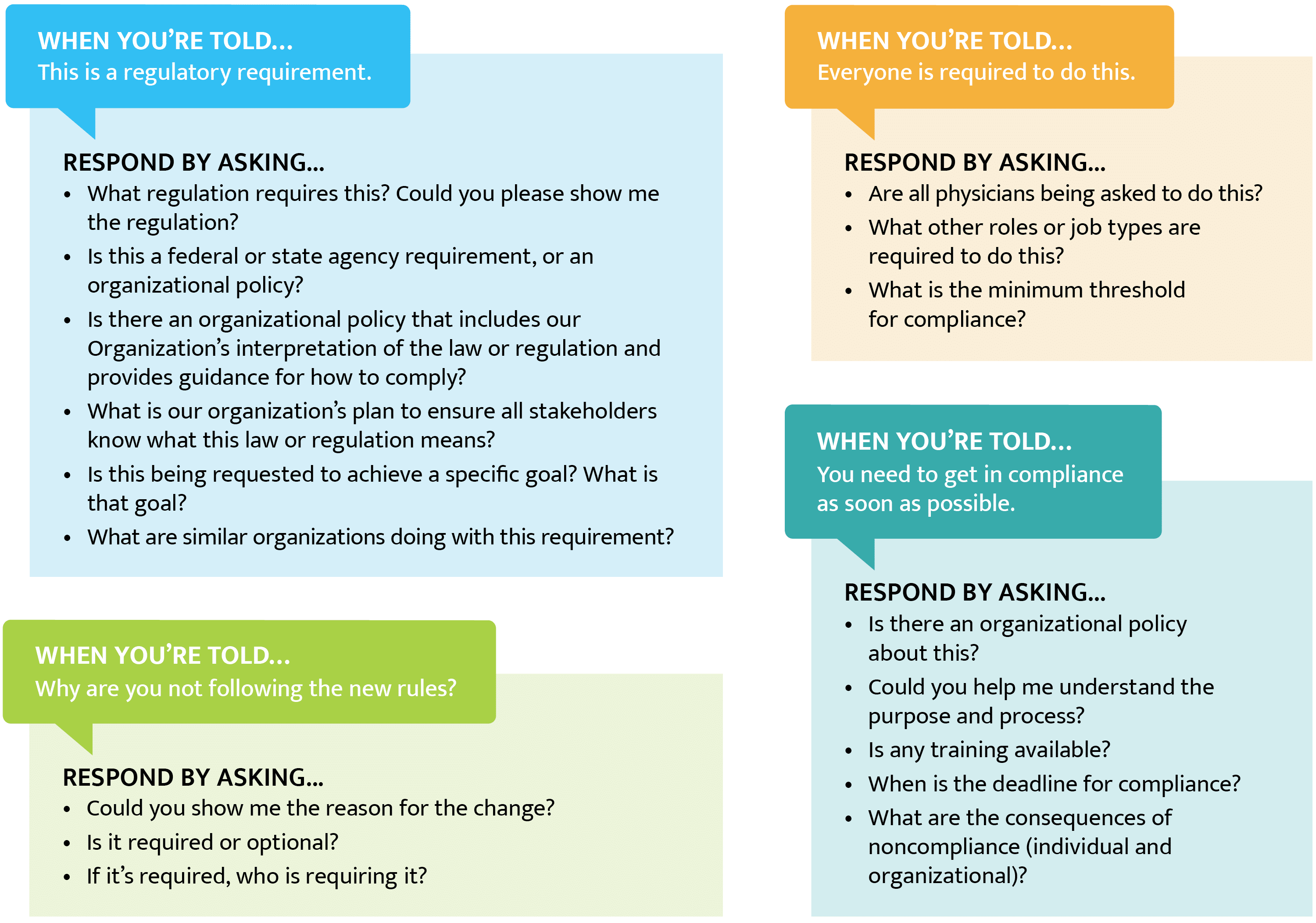
Well-intended overinterpretation or misinterpretation of regulatory requirements can increase workload, lead to “over-documentation,” and contribute to clinician and staff burnout. As the Chief Medical Officer of Intellicure, for 25 years I have had to deal with various hospital administrators demanding that our software “do” something that I know is not required by any regulation, will reduce efficiency and frustrate wound center staff. Although healthcare is one of the most regulated industries in the country, much of the so-called regulatory frustrations are due to local practice and institutional policies – in other words, an organization’s interpretation of regulatory requirements. The American Medical Association is fighting back with its Reducing Regulatory Burden Playbook. The playbook is available for free.

When clinicians or management companies ask why a process must be done in a certain way, they are told, “It’s a regulatory requirement.” Administrators know that answer will make most people give up. However, we have a right to ask, “Where is that regulation? Can you show me?” I love the graphic above from the AMA about how to respond to various demands that come under the guise of a regulatory requirement.


Caroline Fife, MD

Dr. Fife is Co-Founder and Chief Medical Officer of Intellicure, Executive Director of the US Wound Registry, and Editor of Today’s Wound Clinic.

Subscribe to the Intellicure Blog!

Submit the form below to receive email alerts when Intellicure publishes a new blog post! This information will not be shared.

Follow Intellicure

You May Also Like …

Wound Care Quality Outcome Metrics: What They Are and Why They Matter for Your Practice

Wound Care Quality Outcome Metrics: What They Are and Why They Matter for Your Practice

Wound care quality outcome metrics have become the primary language through which practices prove their clinical value to payers, CMS, and accreditation bodies under value-based reimbursement. This article breaks down which metrics matter most, how they tie into MIPS and QCDR reporting requirements, and how purpose-built wound care technology makes measurement actionable rather than a burden.

Wound Care Billing and Coding Best Practices: A Step-by-Step Guide for Clinicians

Wound Care Billing and Coding Best Practices: A Step-by-Step Guide for Clinicians

This step-by-step guide to wound care billing and coding best practices walks wound care physicians, clinic administrators, and billing teams through documentation structure, CPT code selection, modifier rules, ICD-10 pairing, claim scrubbing, and denial management. Whether you operate a hospital-based wound center or an independent clinic, these principles provide a clear, repeatable process for maximizing first-pass claim acceptance and improving revenue cycle performance.